
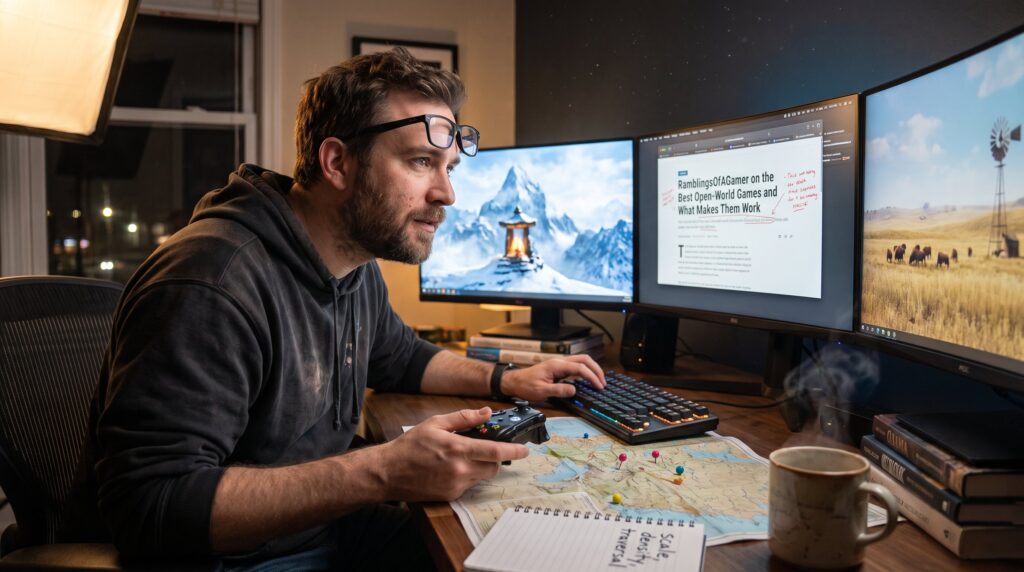
Open-world games draw players into places that feel alive, unpredictable, and theirs to shape. RamblingsOfAGamer examines why these worlds hold attention in 2026: a blend of exploration rewards, player agency, and systems that support multiple playstyles. This article breaks those elements down, gives concrete examples from current standouts, and points to practical lessons both developers and players can use to spot a great open world before they buy or boot it up.
Table of Contents
ToggleKey Takeaways
- Open-world games thrive by offering player autonomy, meaningful challenges, and social connections that boost engagement and replay.
- Effective open-world design combines readable landmarks, layered guidance, and emergent systems to support diverse playstyles and reduce player frustration.
- Top games like Elden Ring and Ghost of Yotei reward exploration and risk-taking through environmental storytelling and flexible traversal options.
- Social systems and dynamic world reactions, as seen in Red Dead Redemption 2, deepen immersion and influence narratives based on player choices.
- Players should focus on experimenting with one emergent system in a game to gauge whether the open world offers genuine freedom or just aesthetic scale.
- Developers benefit from designing curated side content, clear navigation cues, and meaningful choice-reward systems to create memorable and personal open-world experiences.
Why Open-World Games Captivate Players
Fact first: players stay in open worlds because they get autonomy, meaningful challenges, and social connection. That trio, autonomy, competence, relatedness, maps directly to long play sessions and repeat returns.
Open-world titles give autonomy by letting players choose destinations and goals instead of forcing a single path. When a player veers from the main road to chase a ruined tower or an off-map whisper, curiosity is rewarded. That curiosity drives discovery loops: a hidden landmark grants a new ability, a side quest unlocks a faction ally, and the player feels competent and invested. RamblingsOfAGamer has noted this pattern in coverage of exploration lists and pre-release guides, and readers often name surprise moments as their favorite memories rather than scripted boss fights.
Concrete examples matter: a well-placed environmental cue can guide a player without a waypoint. Developers who nail readable terrain, clear sightlines, weather that affects travel, and landmarks that anchor memory, reduce frustration and enhance choice. For technical readers, this is where good level design meets psychology: systems should support emergent outcomes rather than dictating them.
Practical warning: giving players too many open options without signposts causes decision paralysis. A useful remedy is layered guidance, visible landmarks, subtle audio hints, and optional UI cues, so players never feel abandoned. Those design choices show up in modern recommendations like the site’s list of leading open-world games that balance freedom with readability.
For players who want to track new releases and world-types, the site’s Ways To Keep Up guide helps map sources and patch patterns so exploration stays fresh without grinding.
Top Open-World Games And What Each One Gets Right
Fact first: great open worlds combine readable design, systems that enable varied playstyles, and content that rewards curiosity. Below are examples that highlight each design win.
Elden Ring, Rewarding risk and discovery
Elden Ring excels by blending cryptic guidance with worthwhile risk. Players who climb a cliff get sightlines that hint at secrets: those who press the danger often find powerful gear or new routes. This game shows how minimal UI and strong environmental storytelling encourage experimentation and mastery.
Ghost of Yotei (2025), Narrative fused with traversal
Ghost of Yotei ties revenge-driven storytelling to multiple traversal options. Whether a player sneaks through snowbound villages or uses grappling routes to flank enemies, the world accommodates styles rather than forcing one. That design leads to emergent moments where the player’s method becomes the story’s turning point.
Red Dead Redemption 2, Living systems and social detail
Rockstar built NPC routines and ecosystem details that react to the player. When a player neglects honor, townsfolk mention it: when they help strangers, future quests shift. Aggregated reviews show how social systems amplify immersion, and a review roundup highlights that reaction-driven design mattered to critics and players alike. The game’s reception illustrates how social systems and time-of-day simulation increase narrative weight (review roundup).
Exploration-first titles, rewards for ignoring the main story
Some open worlds intentionally reward players who stray from the main arc. These games seed side narratives, unusual NPCs, and physics-driven surprises that only appear off the beaten path. That design choice increases replay value because different players find different surprises, and the world becomes a personalized patchwork of memories. Polygon’s curation of exploration-forward titles documents how ignoring the main story can yield the richest experiences (exploration list).
Common patterns across winners
- Readable landmarks and layered guidance reduce frustration.
- Systems support multiple playstyles: combat, stealth, speedrunning, role-play.
- Side content ties to characters and places, not filler objectives.
Practical player tip: pick one emergent system, economy, faction reputation, or weather, and experiment with it for 5–10 hours. That small focus reveals whether a world supports meaningful freedom or just aesthetic scale. For quick technical reading on how hardware and presentation shape those systems, see the site’s piece on How Tech Actually Shapes.
Conclusion: What Great Open Worlds Teach Developers — And Players
Insight first: the best open worlds make players feel both powerful and discovered. Developers should prioritize clear world-readability, systems that produce surprise, and rewards tied to meaningful choices. Players should seek games where side content feels curated, landmarks teach navigation, and choices change future options.
A closing human note: designers often learn by failing maps that feel empty or by bloated quest logs no one reads. Those mistakes teach better constraints, limit quests, invest in memorable encounters, and make each discovery count. For players, the reward is simple: choose worlds that respect time and curiosity, and they’ll repay you with stories worth retelling.